
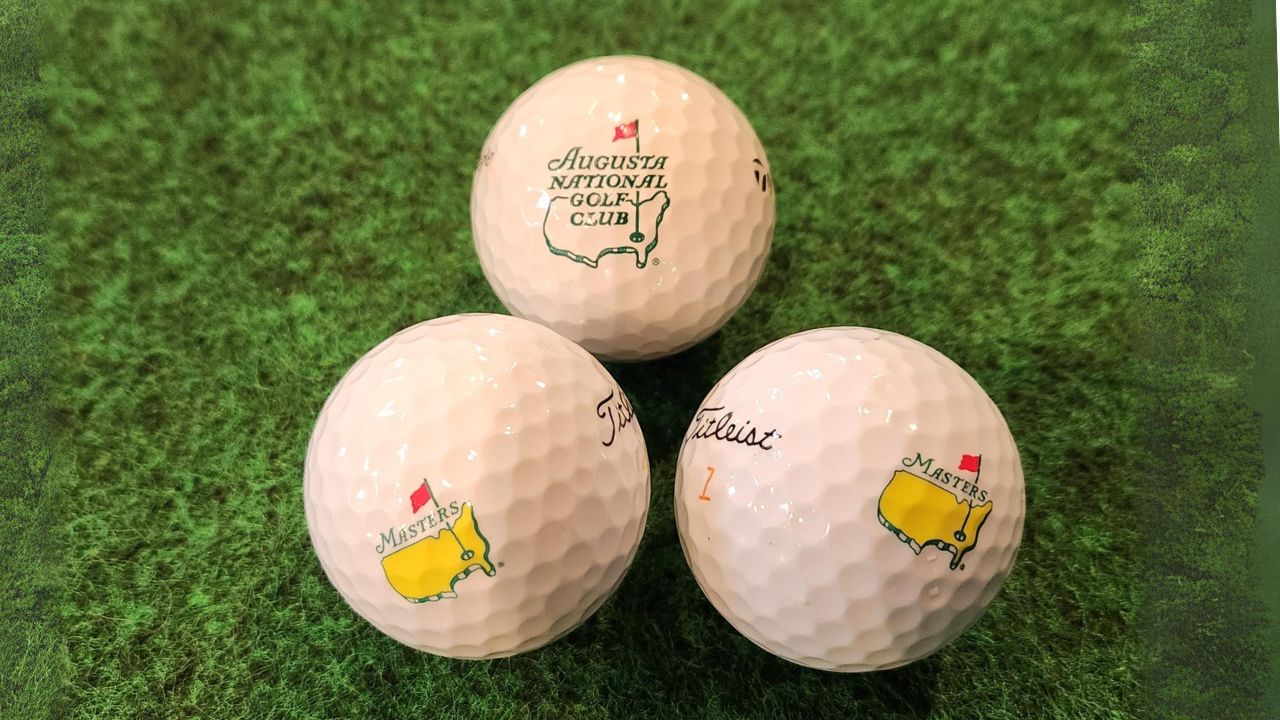
In the world of golf, few tournaments capture the imagination and the spirit of the sport quite like The Masters. Held each spring at the lush, meticulously manicured grounds of Augusta National Golf Club, The Masters is not just a championship—it's a tradition, an annual pilgrimage for the world's finest players and a legion of devoted fans. It’s a tournament where legends are made, where the azaleas bloom as vibrantly as the competition on the fairways, and where every swing can etch a name into history.
But beneath the strokes of genius and the strategic maneuvers on this hallowed course lies an often-overlooked protagonist: the golf ball. Yes, the humble sphere that has rolled its way through the annals of The Masters’ storied past, adapting and evolving, just as the game itself has. From the balata balls of yesteryear to the modern multi-layered technology that navigate the undulating greens of Augusta today, the golf ball has been a silent, steadfast companion to every champion’s journey.
At Two Guys with Balls, we understand the critical role that the right golf ball plays in elevating a golfer's game, especially on a stage as grand as The Masters. It's not just about the brand or the model; it's about how a well-chosen ball can complement a player's skills, confidence, and strategy. This blog post is dedicated to exploring the illustrious history of The Masters, delving into the current landscape, and forecasting the 2025 outlook, all through the unique lens of golf ball evolution and selection.
Join us as we embark on a journey through time, from the inception of this iconic tournament to the present day, and explore how choosing the perfect golf ball from Two Guys with Balls can not only enhance your game but also connect you to a piece of golfing history.
🌟 Update for 2026: The 90th Masters Tournament tees off April 9-12 at Augusta National. Rory McIlroy returns as defending champion after completing the career Grand Slam in dramatic fashion last year, beating Justin Rose in a sudden-death playoff. Now the question is whether McIlroy can go back-to-back, or if Scottie Scheffler, Bryson DeChambeau, or a hungry contender like Ludvig Åberg will take the green jacket. The tournament may be steeped in tradition, but the gear and the golf balls keep evolving.

The Masters Tournament, an event synonymous with tradition, excellence, and the indomitable spirit of golf, has woven itself into the fabric of the sport's history since its inception in 1934. Founded by Bobby Jones, one of golf's greatest amateurs, and Clifford Roberts, an astute investment banker, The Masters was born out of a shared vision to create a tournament that would bring together the world's top golfers in a contest of skill, strategy, and sportsmanship.

The story of The Masters begins with the creation of Augusta National Golf Club, a course designed by Jones and legendary course architect Alister MacKenzie. Nestled amidst the natural beauty of Augusta, Georgia, the club became the permanent home for the tournament, setting the stage for what would evolve into one of golf’s most prestigious events. The inaugural tournament, then called the "Augusta National Invitational," saw Horton Smith crowned as the first champion, marking the start of a new era in competitive golf.
Over the decades, The Masters has been the backdrop to some of golf's most unforgettable moments. From Gene Sarazen's "shot heard 'round the world" in 1935 to Tiger Woods' historic win in 1997, becoming the youngest Masters champion at the age of 21, the tournament has been a showcase of extraordinary talent and dramatic finishes. Each year, the winner is awarded the iconic Green Jacket, a symbol of golfing excellence and membership into the exclusive club of Masters champions.

As the tournament matured, so did its traditions and its impact on the sport. The Masters introduced numerous innovations, including the first live broadcast of a golf tournament in 1956, enhancing its reach and popularity. The course itself has undergone several modifications to keep pace with the changing dynamics of the game and the advancements in golf technology, ensuring that the challenge it presents remains both fair and demanding.
The Masters is not just known for its competitive spirit but also for its commitment to preserving the traditions of the game. The Par 3 Contest, initiated in 1960, the ceremonial opening tee shots by legendary golfers, and the strict adherence to etiquette and decorum, all contribute to the unique atmosphere that envelops Augusta National each spring.
The tradition of awarding a Green Jacket to the winner of The Masters Tournament is steeped in history and exclusivity, dating back to 1949 when Sam Snead was the first to receive this iconic emblem of victory. The Green Jacket is more than just a piece of attire; it symbolizes membership into the elite club of Masters champions, a tangible link to the prestige and tradition of one of golf's most revered tournaments. Members of the Augusta National Golf Club have worn green jackets since 1937 to signify their membership, and the extension of this tradition to the tournament's winner symbolizes their honorary inclusion into this distinguished group. This tradition underscores the sense of camaraderie and respect that defines The Masters, granting the champion not just a trophy for their victory, but a lasting symbol of their achievement and a permanent place in the tournament's storied history.
As The Masters has evolved into one of golf's most revered events, so too has the golf ball, quietly revolutionizing how the game is played. From the gutta-percha balls of the 1800s to today's multi-layer designs, technology has transformed what's possible on the course. Tour players rely on precision-engineered balls like the Titleist Pro V1 (Scottie Scheffler's ball of choice), the TaylorMade TP5 (the ball Rory McIlroy switched to before winning the 2025 Masters), and the Callaway Chrome Soft X, each designed for optimal spin, control, and distance.
At Augusta National, where every yard matters and every bounce counts, golf ball choice is more than preference—it’s strategy. The course’s lightning-fast greens and narrow approaches demand a ball that performs under pressure. It’s no coincidence that the same models trusted on Sunday at The Masters are also the ones dominating your local leaderboard.
We see the ball as more than just equipment—it’s a link to the game’s rich tradition. At Two Guys with Balls, we help you play with the same elite-level performance without the elite-level price tag. Whether you're chasing birdies or memories, the right ball can make all the difference.
The evolution of the golf ball is a story of innovation, science, and a quest for perfection. At The Masters, this humble piece of equipment has played a pivotal role in shaping the tournament's history, influencing scores, and defining moments. As we delve into the journey of golf balls through the ages at Augusta National, we uncover how each era's ball technology mirrored the changing dynamics of the game and the legendary tournament itself.
In the initial tournaments of the 1930s and 1940s, the gutta-percha ball was the standard. Made from the dried sap of the Malaysian sapodilla tree, these balls were known for their firmness and reliability. However, as the game evolved, so did the ball. By the mid-20th century, the balata ball became the preferred choice for professionals. Balata, a softer material, allowed for greater spin control and feel, giving skilled players a significant advantage in navigating Augusta National's challenging greens and fairways. This era saw players like Ben Hogan and Arnold Palmer, who mastered the art of shot shaping and precision, dominate The Masters.
The introduction of wound balls marked the next significant evolution in golf ball technology. These balls featured a rubber core wrapped in rubber thread, encased in a balata cover, offering a blend of distance, durability, and control. This technology dominated the game from the late 1960s through the 1990s, a period that coincided with some of The Masters' most memorable moments. Players like Jack Nicklaus, Gary Player, and Tiger Woods leveraged these balls to achieve remarkable feats, including Tiger's historic 1997 victory, which redefined what was possible at Augusta.
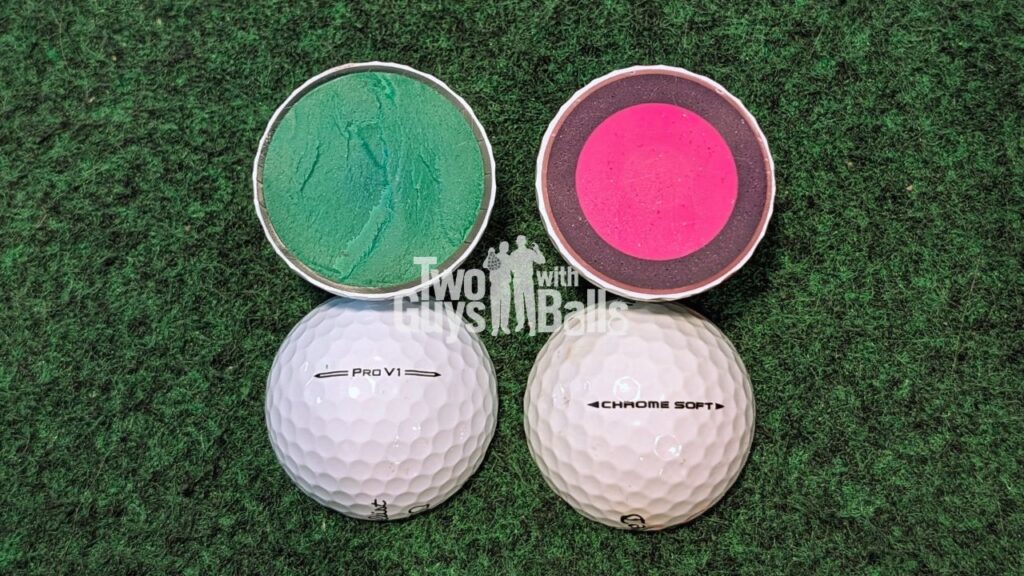
The turn of the millennium ushered in the era of multi-layer golf balls, combining the best aspects of distance, feel, and durability. Leading the pack was the Titleist Pro V1 392 introduced in 2000, setting the standard for the rest of the industry. These balls, which feature a core, mantle, and cover layer, have become the standard in the modern game. The multi-layer construction allows for tailored performance characteristics, enabling players to choose balls that complement their playing style. Today's competitors at The Masters, such as Scottie Scheffler (Titleist Pro V1), Rory McIlroy (TaylorMade TP5), and Bryson DeChambeau (Titleist Pro V1x), rely on these advanced balls to tackle the course's intricacies, from tee shots down Magnolia Lane to delicate putts on its lightning-fast greens.
The journey of the golf ball through the ages at The Masters is a testament to the spirit of innovation that defines the game of golf. As we look forward to future tournaments, we anticipate the continued evolution of golf ball technology and its role in defining the next generation of champions at Augusta National.
As we pivot from the rich tapestry of its history and the technological evolution of the golf ball, The Masters continues to stand as a beacon of excellence and tradition in the ever-evolving world of golf. The tournament's current landscape is a blend of timeless traditions and modern innovations, where the spirit of competition burns as brightly as ever. This section delves into the nuances of today's Masters, the pivotal role of golf ball technology, and how these elements converge to shape the tournament's future.
The Masters of the present era retains its core identity, cherishing the customs that have made it a unique spectacle in sports. Yet, it has gracefully incorporated technological advancements and modern conveniences to enhance the experience for players and spectators alike. The introduction of digital platforms for broadcasting and live updates, alongside the use of advanced agronomy practices to maintain the pristine condition of Augusta National, exemplifies this blend of tradition and innovation.
Today's golf balls are marvels of engineering, designed to meet the demands of the professional game's power and precision. At Augusta National, where every yard and spin rate can be the difference between a jacket and a near miss, the choice of golf ball is more critical than ever. Modern balls offer players the ability to tailor their equipment to the course's challenges, from navigating the swirling winds of Amen Corner to mastering the slick greens.
Recent Masters winners prove that success at Augusta isn't just about skill, it's also about using the right tools for the job. Golf ball selection plays a huge role in navigating the course's demanding greens, swirling winds, and pressure-packed moments. Rory McIlroy's 2025 win is a perfect example. He switched from the TaylorMade TP5x to the TP5 earlier that season for better spin control and wind performance, then went on to win three events including the Masters. Each champion's ball of choice reflects a calculated decision to suit their strengths.
These are the balls that have earned green jackets in recent years:
| Year | Winner | Golf Ball Model |
|---|---|---|
| 2025 | Rory McIlroy | TaylorMade TP5 |
| 2024 | Scottie Scheffler | Titleist Pro V1 |
| 2023 | Jon Rahm | Callaway Chrome Soft X |
| 2022 | Scottie Scheffler | Titleist Pro V1 |
| 2021 | Hideki Matsuyama | Srixon Z-Star XV |
| 2020 | Dustin Johnson | TaylorMade TP5x |
| 2019 | Tiger Woods | Bridgestone Tour B XS |
| 2018 | Patrick Reed | Titleist Pro V1 |
| 2017 | Sergio García | TaylorMade TP5 |


The 89th Masters Tournament delivered one of the most dramatic finishes in the event's storied history. Rory McIlroy, playing a TaylorMade TP5, completed the career Grand Slam with a sudden-death playoff victory over Justin Rose (Titleist Pro V1x) on the 18th hole, becoming just the sixth golfer ever to win all four major championships.
McIlroy's path to the green jacket was anything but smooth. He entered the final round with a two-shot lead over Bryson DeChambeau (Titleist Pro V1x), then immediately lost it with a double bogey on the first hole after finding a fairway bunker and three-putting. He rebuilt a four-shot cushion by the turn, only to give it back again with another double bogey at the par-5 13th after hitting into the water. In all, McIlroy made four double bogeys during the tournament and still won, a first in Masters history.
Justin Rose, who had led after each of the first two rounds, fired a final-round 66 with 10 birdies to force the playoff. But McIlroy redeemed himself on the extra hole, sticking a wedge to four feet and converting the birdie putt after Rose missed his own birdie try.
The win was McIlroy's fifth major title, his first since the 2014 PGA Championship, and came on his 11th attempt to win the Masters and 17th appearance at Augusta. Patrick Reed (Titleist Pro V1x+ prototype) finished solo third at 9-under, with Scottie Scheffler (Titleist Pro V1) fourth at 8-under. DeChambeau and Im Sung-jae (Titleist Pro V1x) tied for fifth.
McIlroy's victory also highlighted the impact of a well-timed equipment change. His switch from the TaylorMade TP5x to the TP5 earlier in the season gave him better control on partial wedge shots and more consistency in the wind, two things Augusta demands on Sunday. It was a reminder that at this level, the right golf ball isn't just preference. It's strategy.
| Finish | Player | Golf Ball |
|---|---|---|
| 1st | Rory McIlroy | TaylorMade TP5 |
| 2nd | Justin Rose | Titleist Pro V1x |
| 3rd | Patrick Reed | Titleist Pro V1x+ (prototype) |
| 4th | Scottie Scheffler | Titleist Pro V1 |
| T5 | Bryson DeChambeau | Titleist Pro V1x |
| T5 | Im Sung-jae | Titleist Pro V1x |
The 90th Masters Tournament tees off April 9-12 at Augusta National Golf Club, with a field that blends defending greatness, unfinished business, and rising talent. The course has been stretched to a record 7,565 yards, with the 17th hole (Nandina) extended by 10 yards to 450. The purse remains $21 million.
Augusta National continues to serve as the one course where the game's best compete under the same roof regardless of tour affiliation. The 2025 Masters proved how compelling that dynamic can be, with PGA Tour star McIlroy and LIV-affiliated Reed finishing first and third. The 2026 field brings that same energy, with past champions Rahm, Dustin Johnson (TaylorMade TP5x), Phil Mickelson, and Reed representing LIV Golf alongside PGA Tour pillars like Scheffler, McIlroy, Schauffele, and Morikawa. At the Masters, the ball doesn't care which tour logo is on your shirt. Performance is the only membership that matters.
As the final cheers echo through the towering pines of Augusta National, another chapter in Masters history is complete, reminding us why this tournament holds such a revered place in the heart of the golf world. From its rich traditions to the evolving technology that defines the modern game, The Masters showcases golf's unique balance of heritage and innovation. And at the core of that evolution? The humble yet mighty golf ball.
With its blooming azaleas, iconic green jacket, and historic fairways, The Masters continues to captivate. Rory McIlroy's 2025 Grand Slam completion proved that the tournament still has the power to deliver once-in-a-generation moments. It's a place where legends are made and greatness is measured not just by trophies, but by resilience, strategy, and precision under pressure. Each year adds new stories to its legacy, inspiring golfers of all levels to raise their game.
As technology advances, the golf ball has become more than just a piece of equipment. It's a symbol of progress in a sport steeped in tradition. From faster cores to better aerodynamics, golf ball innovation has reshaped how the game is played, and The Masters remains a showcase for that evolution. McIlroy's mid-season switch to the TaylorMade TP5 is just the latest example of how the right ball at the right time can change everything.
While the drama at Augusta is reserved for the elite, the lessons and gear aren't. Recreational golfers can learn plenty from how the pros approach the game, especially when it comes to selecting the right golf ball. That's where Two Guys with Balls comes in. We offer the same tour-quality models you see at The Masters, all carefully graded, wallet-friendly, and ready to help you play your best.
We're more than just a golf ball store. We're a community of golf lovers dedicated to helping players find their confidence and consistency, one ball at a time. Whether you're grinding out your weekend round or dreaming of Amen Corner, we're here to support your journey with premium balls, expert insights, and a whole lot of heart.
As golf continues to evolve, welcoming new players, new rivalries, and new innovations, The Masters remains its compass, reminding us what makes the game so special. At Two Guys with Balls, we're proud to be part of that journey, helping every golfer connect with the game's legacy while looking boldly toward its future.
The Masters teaches us that greatness starts with one shot, and the right golf ball can make all the difference. Here's to finding yours, and to enjoying the walk from tee to green with confidence, pride, and maybe a bit of swagger.














Great reading